
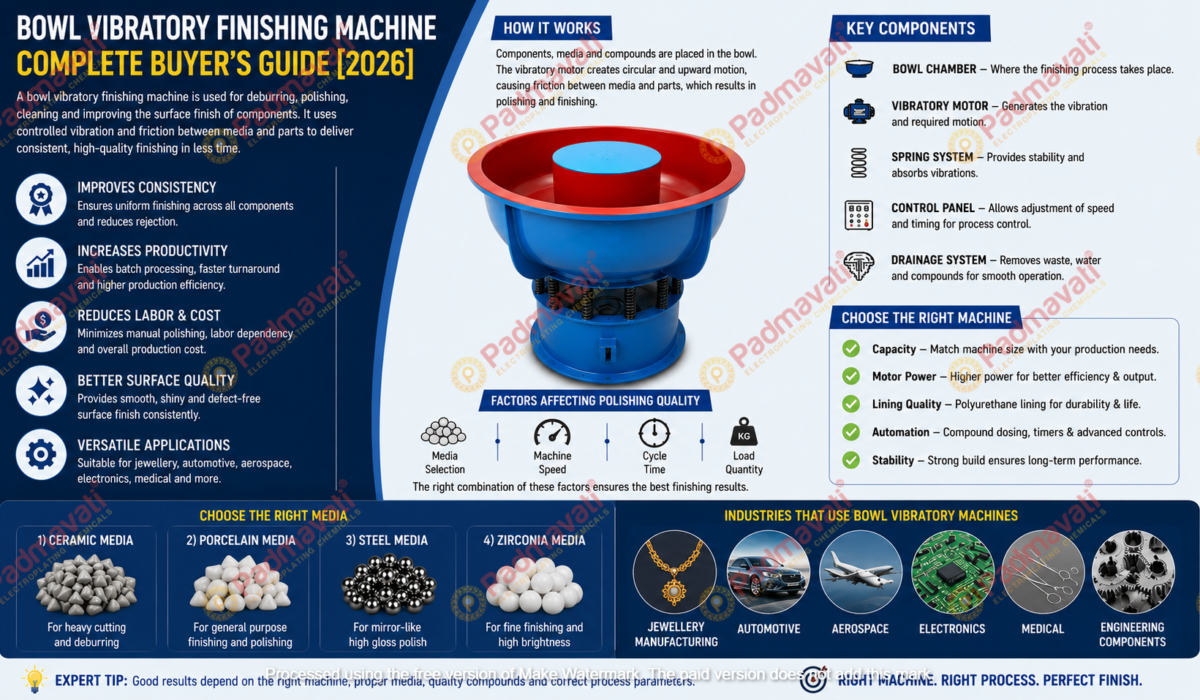
Bowl Vibratory Finishing Machine: Complete Buyer’s Guide [2026]
If your finishing quality is inconsistent, your production speed is low, or your polishing cost is increasing, the real issue is often not your process but your machine selection. Choosing the right bowl vibratory finishing machine directly improves surface finish, reduces rejection, and increases production efficiency.
I have worked closely with manufacturers who invested heavily in finishing setups but still struggled with inconsistent results. In most cases, the problem was not the process but the wrong machine selection or lack of clarity about how to use it effectively. In this guide, I will explain how you can choose, operate, and optimize a bowl vibratory finishing machine based on real-world requirements.
What is a Bowl Vibratory Finishing Machine?
A bowl vibratory finishing machine is a mass finishing system used for deburring, polishing, cleaning, and improving the surface finish of components. It operates by generating controlled vibrations inside a bowl that contains media, components, and chemical compounds. These vibrations create friction between the media and the parts, which gradually smoothens the surface and produces a uniform finish across all components.
Skimmable Insight:
A bowl vibratory finishing machine uses vibration and friction to automate polishing and deliver consistent surface finishing.
Why should you use a Bowl Vibrator Polishing Machine?
From my experience, manual polishing leads to inconsistent quality, higher labor costs, and slower production. A Bowl Vibrator Polishing Machine eliminates these issues by standardizing the finishing process and enabling batch operations. It ensures uniform polishing across all parts and reduces dependency on manual intervention. Once the process is optimized, the machine consistently delivers the same results, which is critical for maintaining quality standards in production.
Skimmable Insight:
A bowl vibrator polishing machine improves consistency, reduces labor dependency, and increases production efficiency.
How does a bowl vibratory finishing machine work?
The working process begins by loading components into the bowl along with suitable media and compounds. When the machine is activated, the vibratory motor creates a combination of circular and upward motion. This motion results in continuous interaction between the media and the components, which leads to polishing and finishing. The effectiveness of the process depends on factors such as vibration intensity, processing time, media selection, and compound quality.
Skimmable Insight:
The machine uses controlled vibration to generate friction between media and components for uniform polishing.
What are the key components of a Round Bowl Type Vibrator Polishing Machine?
A Round Bowl Type Vibrator Polishing Machine consists of several essential components that work together to ensure efficient operation. The bowl chamber is where the finishing process takes place, while the vibratory motor generates the required motion. The spring system provides stability and absorbs vibrations, and the control panel allows adjustment of speed and timing. The drainage system helps in removing waste materials and excess compounds, ensuring smooth operation throughout the process.
Skimmable Insight:
A round bowl type vibrator polishing machine includes key components such as the motor, bowl chamber, springs, and control system that ensure efficient performance.
How to choose the right bowl vibratory finishing machine?
Choosing the right bowl vibratory finishing machine requires a clear understanding of your production needs. Capacity is one of the most important factors, as smaller machines are suitable for jewellery applications while larger machines are required for industrial production. Motor power determines the efficiency and speed of the process, while the quality of lining, especially polyurethane lining, affects durability. Automation features such as compound dosing improve consistency, and machine stability plays a crucial role in long-term performance.
Skimmable Insight:
The right machine should be selected based on capacity, motor power, lining quality, and automation features aligned with production requirements.
Which industries use Jewellery Polishing Machine?
A polishing machine for jewellery is widely used across industries that require high-quality surface finishing. In jewellery manufacturing, it helps achieve a smooth and shiny surface. In automotive and aerospace industries, it is used for deburring and preparing components for further processing. Electronics and medical industries also use these machines to ensure consistent and precise finishing. Although the applications vary, the primary objective remains achieving uniform surface quality.
Skimmable Insight:
Jewellery polishing machines are used across multiple industries for achieving consistent and high-quality surface finishing.
What factors affect polishing quality?
Polishing quality depends on several factors beyond just the machine. Media selection is critical, as different materials require different finishing approaches. Compound quality affects cleaning efficiency and brightness. Machine speed, cycle time, and load quantity also influence the final output. In many cases, poor polishing results are due to incorrect process parameters rather than machine limitations.
Skimmable Insight:
Polishing quality depends on process control, including media, compound, speed, and load conditions.
How to select the right media and compound?
The selection of media and compound plays a crucial role in determining the final finishing quality. Ceramic media is generally used for heavy cutting and deburring, plastic media is suitable for lighter finishing, and steel media is ideal for achieving a mirror-like polish. Compounds vary depending on the application, with cleaning compounds used for removing contaminants and brightening compounds used for enhancing surface finish. The correct combination ensures optimal performance and consistent results.
Skimmable Insight:
Proper selection of media and compound is essential for achieving efficient and high-quality finishing.
What mistakes should you avoid while buying?
Many buyers make the mistake of focusing only on price while ignoring important technical aspects. Choosing a low-capacity machine often leads to production inefficiencies. Ignoring motor quality can result in performance issues and increased maintenance. Lack of after-sales support can create operational challenges. Another common mistake is purchasing a machine without fully understanding the process requirements, which leads to unsatisfactory results.
Skimmable Insight:
Avoid focusing only on cost and prioritize performance, durability, and long-term efficiency.
What is the cost of a bowl vibratory finishing machine?
The cost of a bowl vibratory finishing machine depends on its size, capacity, and features. Smaller machines typically range from ₹30,000 to ₹1,00,000, while medium-sized machines range from ₹1 lakh to ₹5 lakh. Larger industrial machines can exceed ₹5 lakh. Although the initial investment may seem high, the return on investment is usually quick due to improved efficiency, reduced labor costs, and better finishing quality.
Skimmable Insight:
Machine cost varies based on size and features, but efficiency improvements lead to a quick return on investment.
How to maintain a Round Bowl Type Vibrator Polishing Machine?
Proper maintenance is essential to ensure consistent performance and extend the life of the machine. Regular cleaning of the bowl helps prevent residue buildup, while monitoring motor vibration helps identify potential issues early. Replacing worn-out lining ensures efficient operation, and proper management of compounds maintains consistent finishing quality. Neglecting maintenance can lead to reduced performance and increased downtime.
Skimmable Insight:
Regular maintenance, cleaning, and monitoring are essential for long machine life and consistent output.
Conclusion
From my experience, a bowl vibratory finishing machine is not just equipment but a key factor in achieving consistent finishing quality and operational efficiency. When selected correctly and used with proper process control, it can significantly reduce costs, improve productivity, and enhance overall output. The focus should always be on the complete system, including machine selection, media, compounds, and maintenance practices.
FAQs
What is a bowl vibratory finishing machine?
A bowl vibratory finishing machine is used to polish, deburr, and clean components through vibration-driven friction between media and parts, replacing manual polishing with a faster and more consistent automated process.
Where is a jewellery polishing machine used?
A jewellery polishing machine is used in industries such as jewellery manufacturing, automotive, electronics, and medical components where precise and uniform surface finishing is required.
Which media is best for polishing?
The best media depends on the application, where ceramic media is used for heavy cutting, plastic media for lighter finishing, and steel media for achieving a mirror finish.
What is the price of a bowl vibrator polishing machine?
The price typically ranges from ₹30,000 to ₹5 lakh or more depending on the capacity and features of the machine.
What should you check before buying a machine?
Before buying, you should evaluate the machine’s capacity, motor power, and suitability for your application to ensure it meets your production requirements rather than selecting based only on price.
Conclusions
The rise in global silver prices is not just a market challenge—it is also a major opportunity for the electroplating industry.
As manufacturers seek cost-effective alternatives to solid silver, demand for silver electroplated jewellery, decorative items, and industrial components is expected to grow rapidly.
For companies involved in silver electroplating chemicals and additives, this evolving market presents a powerful opportunity to expand production, innovate plating technologies, and support manufacturers worldwide.
Businesses that focus on efficient plating chemistry, consistent quality, and optimized metal utilization will play a key role in the future of the silver electroplating industry.