
Polypropylene Tank (PP Tank) – Manufacturer & Supplier in India
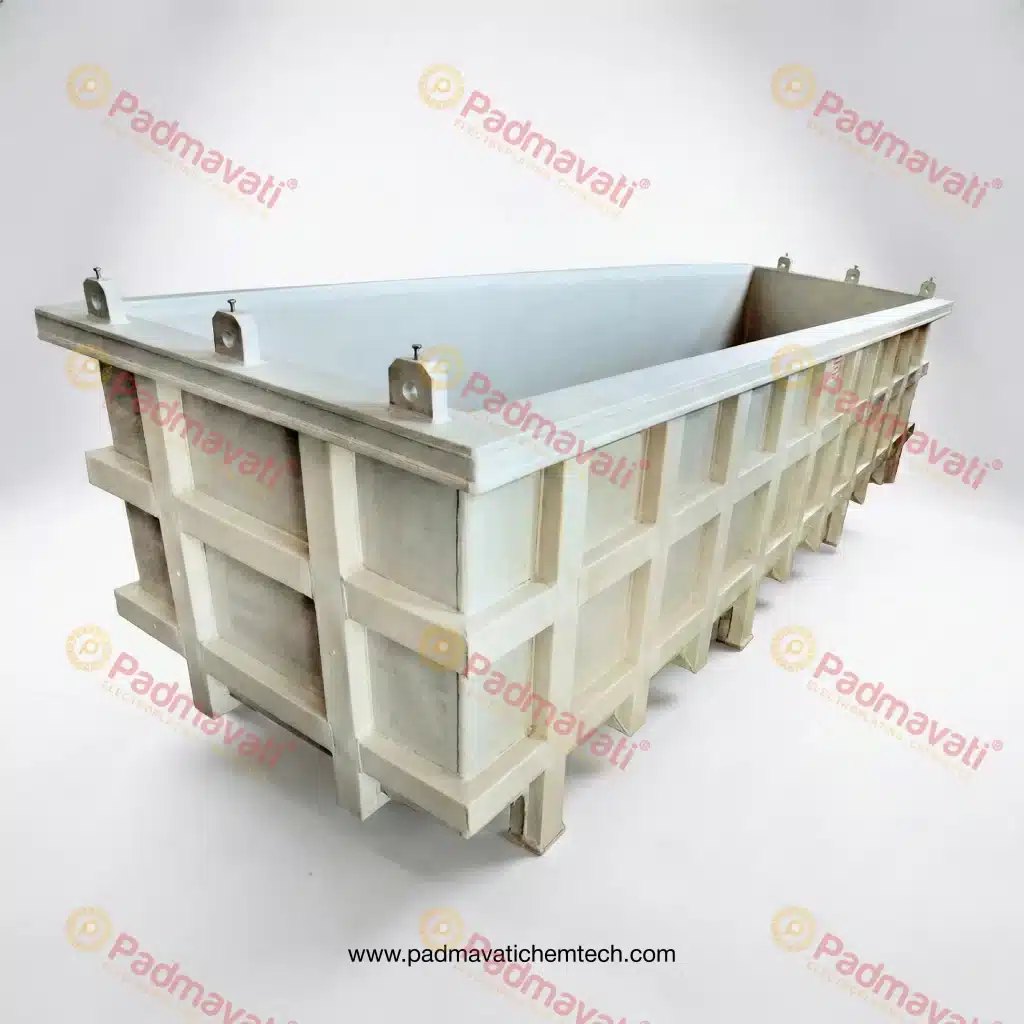
PP Tank (Polypropylene Tank)
Types: Electroplating Process Tanks, Chemical Storage Tanks, Acid Dipping Tanks, Rinsing Tanks
Applications: Electroplating Industry, Chemical Processing, Water Treatment
Comparison: PP vs Stainless Steel, PP vs FRP, PP vs HDPE"
PP tanks are designed to safely store and handle plating chemicals and process solutions. They are highly resistant to acids, alkalis, and corrosive compounds, making them ideal for electroplating environments.
Key Benefits
Excellent resistance to acids, alkalis, and chemicals
Strong and durable with lightweight construction
No reaction with plating solutions
Custom sizes and shapes available
Low maintenance and economical operation
What Is a Polypropylene Tank?
A polypropylene tank (PP tank) is a corrosion-resistant, lightweight tank used in electroplating, chemical storage, and acid processing applications. Padmavati Chemtech is among the leading polypropylene tank manufacturers in India, fabricating custom PP tanks in any dimension to suit your electroplating plant layout. Our polypropylene tanks are welded from food-grade PP sheets, offer excellent chemical resistance to acids, alkalis, and plating solutions, and are available in standard and custom sizes.
Types of PP Tanks We Manufacture
Types of PP Tanks include electroplating tanks, chemical storage tanks, pickling tanks, rinsing tanks, and process tanks for various surface treatment applications. These tanks are available in customized sizes and shapes, designed for handling corrosive chemicals with high durability, leak-proof construction, and long service life in industrial environments.
Polypropylene Tank Specifications
Polypropylene (PP) Tanks are defined by specifications such as capacity (50 liters to 10,000+ liters), wall thickness (typically 5–20 mm), and construction grade (PP/PPH for chemical resistance). They are designed with welded joints, leak-proof structure, and optional reinforcement for strength. Additional features include inlet/outlet fittings, overflow systems, drain valves, and temperature resistance up to 80–100°C for reliable industrial use.
Applications of Polypropylene Tanks
Polypropylene (PP) Tanks are used for storing and processing corrosive chemicals in industries like electroplating, pharmaceuticals, chemical processing, water treatment, and food processing. They are ideal for applications such as acid storage, pickling, rinsing, and plating baths, offering excellent chemical resistance, durability, and long service life in demanding industrial environments.
Why Choose PP Tanks Over SS or MS Tanks?
PP tanks are preferred over SS or MS tanks for handling corrosive chemicals due to their excellent chemical resistance, especially against acids and alkalis. They are lightweight, cost-effective, and do not corrode or react with most plating solutions. Unlike MS, they don’t require coating, and compared to SS, they offer lower cost with sufficient durability for many electroplating and chemical processing applications.
Custom Polypropylene Tank Manufacturing
Custom Polypropylene (PP) tanks are manufactured to meet specific process requirements, including size, shape, thickness, and chemical compatibility. Designs are tailored based on tank capacity, operating temperature, load conditions, and application type. Options include reinforced structures, partitioned tanks, heating arrangements, and customized inlet/outlet fittings, ensuring efficient performance, safety, and long service life in industrial environments.
Polypropylene Tank Price
The price of Polypropylene (PP) tanks in India varies based on capacity, thickness, and customization. Small tanks can start from around ₹8,000–₹25,000, while standard industrial tanks typically range between ₹25,000 to ₹90,000. Larger or customized tanks with higher capacity (1000L–10,000L+) can go from ₹50,000 to ₹1,00,000+ depending on specifications.
Frequently Asked Questions
A polypropylene (PP) tank is used for storing and processing corrosive chemicals such as acids, alkalis, and plating solutions. It is widely used in industries like electroplating, chemical processing, pharmaceuticals, and water treatment for applications including storage, rinsing, pickling, and plating baths due to its high chemical resistance and durability.
The price of a PP tank for electroplating in India typically ranges from ₹25,000 to ₹1,80,000+, depending on capacity, thickness, and customization. Small tanks (500–1000L) start around ₹25,000–₹40,000, while medium tanks (1000–3000L) range from ₹40,000–₹90,000. Larger or heavy-duty tanks can exceed ₹1,00,000 based on specifications and reinforcement.
A polypropylene (PP) tank typically lasts 8 to 15 years or more, depending on chemical exposure, operating temperature, and usage conditions. Proper design, correct thickness, and regular maintenance can further extend its lifespan. PP tanks perform especially well in corrosive environments, making them a durable and long-term solution for electroplating and chemical storage applications.
Yes, polypropylene (PP) tanks can hold many concentrated acids due to their excellent chemical resistance. They are commonly used for acids like hydrochloric and sulfuric in electroplating. However, compatibility depends on acid type, concentration, and temperature, so proper material grade (PP/PPH) and thickness selection are essential to ensure safe and long-term performance.
PP tanks are made from solid polypropylene, offering excellent chemical resistance, smooth surfaces, and easy fabrication, making them ideal for electroplating and chemical processing.
FRP (Fiber Reinforced Plastic) tanks are composite structures with high mechanical strength and rigidity, suitable for large storage and outdoor use. However, FRP may require inner linings for strong chemicals, while PP provides direct chemical resistance with lower maintenance.
Yes, custom-size polypropylene (PP) tanks can be manufactured to meet specific process requirements. Sizes, shapes, wall thickness, and fittings are tailored based on chemical type, tank capacity, temperature, and application needs. Options include reinforced structures, partitioned designs, and customized inlets/outlets to ensure safe, efficient, and long-lasting performance in industrial environments.