
Ultrasonic Cleaning Machine – Jewellery & Industrial Cleaner
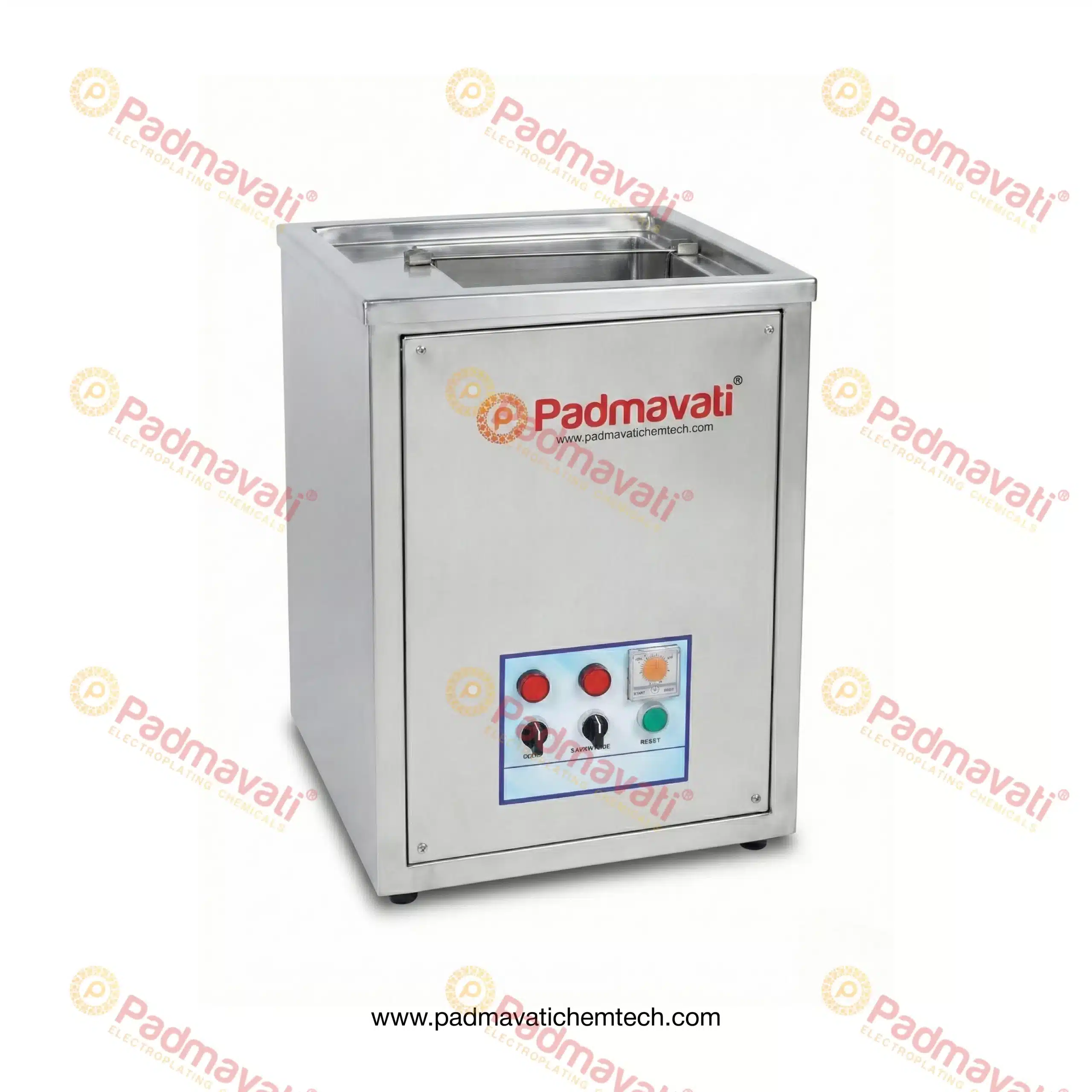
Ultrasonic Cleaning Machine
APPLICATIONS: Jewellery Cleaning (Gold, Silver, Platinum), Watch & Optical Component Cleaning, Industrial Parts Degreasing, Medical Instrument Cleaning
MODELS: Tabletop Models, Industrial Capacity Models
HOW IT WORKS: Cavitation Process, Choosing the Right Cleaning Solution
Key Benefits
Deep cleaning using ultrasonic cavitation
Removes oil, grease, dust, and compound residues
Ideal pre-plating and post-plating cleaning
Non-damaging to delicate jewellery pieces
Improves plating quality and final shine
Fast, efficient, and chemical-saving process
| No. | Tank Size | Power | Heating |
|---|---|---|---|
| 1 | 10″x8″x8″ = 10L | 300 watt | 500 |
| 2 | 10″x8″x16″ = 20L | 400 watt | 750 |
| 3 | 12″x10″x16″ = 30L | 500 watt | 1000 |
| 4 | 12″x12″x18″ = 40L | 600 watt | 1000 |
| 5 | 15″x12″x18″ = 50L | 750 watt | 1500 |
| 6 | 20″x16″x18″ = 90L | 1 KW | 2000 |
| 7 | 20″x16″x24″ = 120L | 1.2 KW | 2000 |
| 8 | 22″x18″x24″ = 150L | 1.5 KW | 3000 |
| 9 | 24″x18″x30″ = 200L | 2.0 KW | 4500 |
What Is an Ultrasonic Cleaning Machine?
An ultrasonic cleaning machine uses high-frequency sound waves to remove dirt, tarnish, and residues from jewellery and metal parts without manual scrubbing. Padmavati Chemtech manufactures ultrasonic jewelry cleaner machines in tabletop and industrial capacities, ideal for gold, silver, and platinum jewellery cleaning as well as industrial degreasing. Our jewelry cleaner machines feature digital temperature and timer controls, stainless steel tanks, and efficient transducer systems.
Ultrasonic Jewelry Cleaner – Models & Capacity
Ultrasonic Jewelry Cleaners are available in multiple models based on tank capacity, power, and application requirements. Common models include compact 1–2 liter units for small jewellery cleaning, mid-range 3–6 liter machines for workshops and retail use, and large-capacity 10–30 liter systems for bulk industrial cleaning.
These machines typically feature stainless steel tanks, 40–42 kHz ultrasonic frequency, digital timers, and optional heating functions, ensuring efficient removal of dirt, oil, and polishing residues without damaging delicate items.
How Ultrasonic Cleaning Works
Ultrasonic cleaning works by generating high-frequency sound waves (typically 40 kHz) in a liquid solution, creating microscopic bubbles through a process called cavitation. These bubbles rapidly form and collapse, producing gentle yet powerful cleaning action that removes dirt, oil, and contaminants from surfaces, even in hard-to-reach areas, without damaging delicate items like jewellery.
Applications of Ultrasonic Cleaning Machines
Ultrasonic Cleaning Machines are used for precise cleaning in industries like jewellery, automotive, electronics, medical, and pharmaceuticals. They effectively remove oil, grease, polishing compounds, and contaminants from complex and hard-to-reach areas. These machines are ideal for cleaning delicate components, improving hygiene, product quality, and overall operational efficiency.
Ultrasonic Cleaning Machine Specifications
Ultrasonic Cleaning Machines are defined by key specifications that determine cleaning efficiency and application suitability. Important parameters include tank capacity (from 1 liter to 300+ liters), ultrasonic frequency (typically 20–40 kHz for general cleaning and up to 80–120 kHz for precision work), and ultrasonic power output based on load size.
Jewelry Cleaner Machine vs. Manual Cleaning
Ultrasonic jewelry cleaning and manual cleaning differ significantly in efficiency, consistency, and effort. Ultrasonic machines use cavitation bubbles to clean deep into intricate areas, removing hidden dirt and residues that manual brushing cannot reach.
Manual cleaning, on the other hand, relies on physical scrubbing, making it suitable for light surface cleaning but often inconsistent and time-consuming. Ultrasonic cleaning is faster, safer for delicate designs, and provides uniform results, while manual methods are better for simple, low-volume cleaning tasks.
Ultrasonic Cleaning Machine Price
Ultrasonic Cleaning Machine prices in India vary based on capacity, power, build quality, and application (home, jewellery, or industrial). Small portable units start as low as ₹300–₹7,000, while standard jewellery cleaning machines typically range between ₹6,000 to ₹25,000. Industrial-grade systems with larger tanks and higher power can cost from ₹50,000 to ₹4,50,000 or more depending on specifications and automation.
Frequently Asked Questions
An ultrasonic cleaning machine is a device that uses high-frequency sound waves to remove dirt, oil, and contaminants from surfaces. It works by generating ultrasonic vibrations in a liquid, creating microscopic bubbles through cavitation. These bubbles rapidly collapse, producing a powerful cleaning action that reaches intricate areas and ensures deep, uniform cleaning without damaging delicate items like jewellery or precision components.
Yes, ultrasonic cleaning is generally safe for gold and diamond jewellery when used correctly. It effectively removes dirt and polishing residues without damaging hard materials like diamonds. However, caution is needed for delicate settings, soft gemstones, or jewellery with loose stones, as vibrations may cause damage. Proper cleaning solution, time control, and inspection before cleaning ensure safe and optimal results.
The price of an ultrasonic jewelry cleaner in India depends on capacity, build quality, and application (home vs. industrial).
For basic home-use machines, prices typically start from around ₹200–₹800, such as compact portable units like Portable Ultrasonic Jewelry Cleaner. Mid-range models with better build and features (timer, higher frequency) usually cost between ₹3,000 to ₹10,000
Jewellery should typically be cleaned in an ultrasonic machine for 2 to 5 minutes, depending on the level of dirt and type of item. Lightly soiled pieces may require shorter cycles, while heavily contaminated items can take slightly longer. Avoid over-cleaning, especially for delicate settings, and always check the jewellery condition before and after the cycle for safe results.
The cleaning solution used in an ultrasonic jewelry cleaner depends on the type of jewellery and contaminants. A mild water-based solution with a few drops of specialized ultrasonic cleaning liquid or gentle detergent is commonly used for general cleaning. For better results, industry-grade cleaning solutions are recommended for removing oils, polishing compounds, and dirt. Avoid harsh chemicals, especially for delicate stones or soft metals, to prevent damage.
An ultrasonic cleaner uses high-frequency sound waves in a liquid to create cavitation bubbles that remove dirt from intricate and hard-to-reach areas. It is ideal for deep, uniform cleaning of complex jewellery designs.
A steam cleaner, on the other hand, uses high-pressure hot steam to blast away surface dirt and grease. It is faster for surface cleaning and drying but less effective for internal or detailed areas. The choice depends on cleaning depth and application needs.